

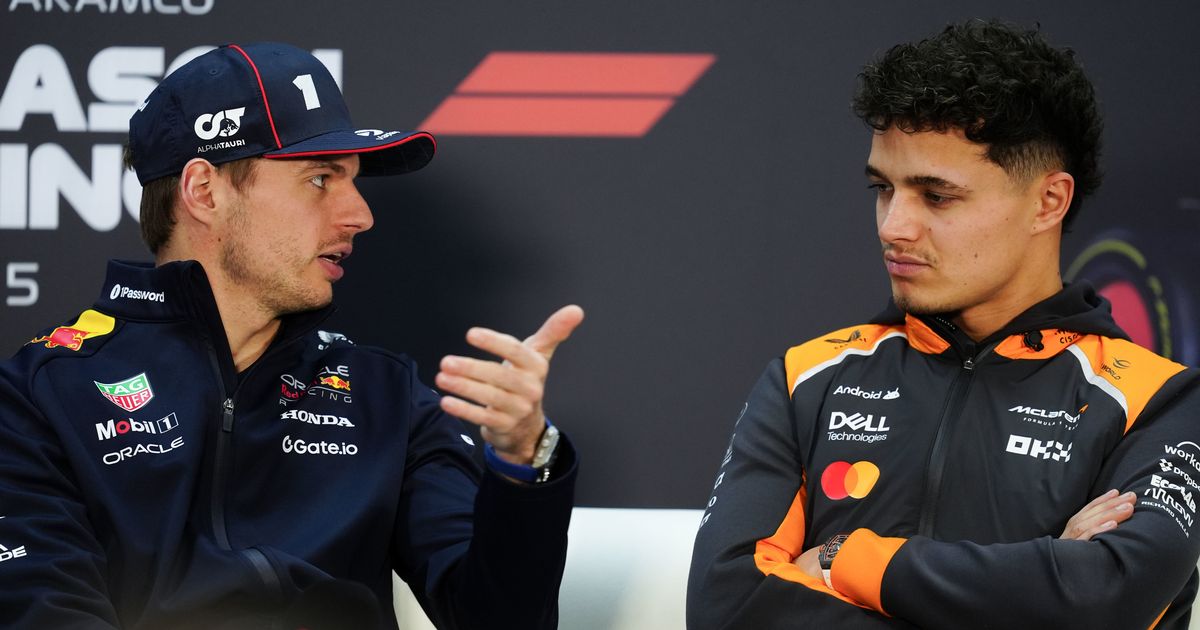
The 2025 Formula 1 season concluded in Abu Dhabi, confirming what had been a roller coaster of human emotion and technical execution: Lando Norris, after seven seasons, had finally secured the Drivers’ World Championship. His victory was not simply a triumph over the grid; it was a tight, agonizing struggle waged on two primary fronts—the relentless challenge of his own teammate, Oscar Piastri, and the spectacular, high-velocity comeback staged by four-time champion Max Verstappen.
Norris clinched the title by just two points, a margin that underscored the fine calibration required to survive a season marked by unexpected crashes, controversial team orders, and a historic double disqualification. This was the year the Red Bull dominance was finally halted, but the title fight was almost lost to the internal strife within the papaya-colored ranks of McLaren.
The Weight of Expectation and the Early Signs of Stress
Following McLaren’s Constructors` title success in 2024, the anticipation for 2025 was immense. Norris, the senior driver, entered the season as the consensus favorite. The opening race in Australia provided instant validation: a dominant front-row lockout and a controlled, measured victory for Norris, even while managing heavy rain and a brief excursion across the gravel. It felt like the trajectory was set.
However, the smooth narrative quickly dissolved. Over the next five races, the focus shifted inward. Piastri, determined to prove his worth in his third year, secured key wins in China and Bahrain. Norris, meanwhile, began to show vulnerability under pressure. Incidents like the fluffed Q3 lap in Bahrain and a crash in Saudi Arabia led to a crucial shift: Piastri took the championship lead. For the first time, Norris was reacting to the challenge, not dictating it. This dynamic set the stage for the dramatic mid-season collapse of team cohesion.
The Papaya Wars: When Teammates Become Rivals
The management of two drivers competing for the same title, particularly at a team with a defined “Papaya Rule” ethos emphasizing equal opportunities, proved highly complex. This delicate balance detonated in Montreal.
Fighting for minor points in Canada, Norris, attempting an ambitious overtake on Piastri, made a clumsy misjudgment, colliding with the rear of his teammate and eliminating him instantly. While Norris took full, immediate accountability—a key element in preventing the situation from turning toxic—the optics were damaging. To outside observers, it reinforced a growing narrative that Norris struggled when the stakes were highest. Ironically, this public acknowledgment of failure seemed to clear Norris’s mental slate, leading to a strong resurgence.
The subsequent races in Austria and Silverstone demonstrated McLaren’s commitment to fair play, allowing the drivers to duel fiercely, sometimes perilously close. The tension peaked at the Italian Grand Prix in Monza, the “Temple of Speed.” Faced with the threat of an undercut, the McLaren pit wall inverted the usual pit sequence. When a slow stop cost Norris track position to Piastri, the team was forced to intervene. Piastri was reluctantly asked to swap positions, effectively handing Norris a vital six-point swing. While technically justifiable due to the sequence reversal, the decision brewed deep resentment, a factor Piastri later admitted influenced his catastrophic weekend in Baku.
The Red Bull Resurgence and the Vegas Calamity
While McLaren was preoccupied with internal politics, the external threat re-emerged with terrifying speed. Max Verstappen, equipped with a significant Red Bull upgrade in Monza, returned to his dominant form. The title fight transformed from a manageable two-way internal duel into a desperate three-way sprint.
The Dutch Grand Prix delivered a massive blow to Norris`s campaign: an 18-point loss due to a chassis-related oil leak, his only non-finish of the season. Sitting dejected on a sand dune, Norris felt his title hopes slipping. Then came Las Vegas, an event almost designed by a scriptwriter for maximum chaos.
In an unprecedented turn, both McLarens were disqualified hours after the race due to excessive plank wear—a consequence of unexpected aerodynamic porpoising. While this kept the gap between Norris and Piastri static, it performed a far greater disservice: it cleared Verstappen’s path to a dominant win, vaulting him into the fight on equal points with Piastri just before the season’s final races. The championship was suddenly wide open, demonstrating that sometimes, the greatest threats are not the people you are racing, but the technicalities of the rulebook.
The Final Drive to Technical Eminence
With Verstappen breathing down their necks, Norris found a new level of focus. Wins in Mexico and Brazil propelled him back to the top of the standings for the first time since April. The pressure had shifted entirely onto Piastri, whose form wavered, leaving Norris as the primary bulwark against the Red Bull machine.
Qatar presented the final strategic hurdle. McLaren chose not to pit Norris and Piastri under a late Safety Car—a controversial technical choice that isolated them from the rest of the field. Verstappen capitalized, winning the race and closing the gap to a mere 12 points. The title would be decided in Abu Dhabi.
In the final race, Norris drove with precision and restraint. Despite being briefly overtaken by Piastri at the start and facing constant pressure from Leclerc, Norris secured the crucial third-place finish. He watched Verstappen claim his sixth win in nine races, a testament to the comeback, but it was not enough. Lando Norris had survived the internal conflict, weathered the technical failures, and held off one of the greatest drivers of his generation to claim his inaugural World Championship. It was a victory forged in turbulence, and all the more resonant for it.
 Rupert Caldwell