

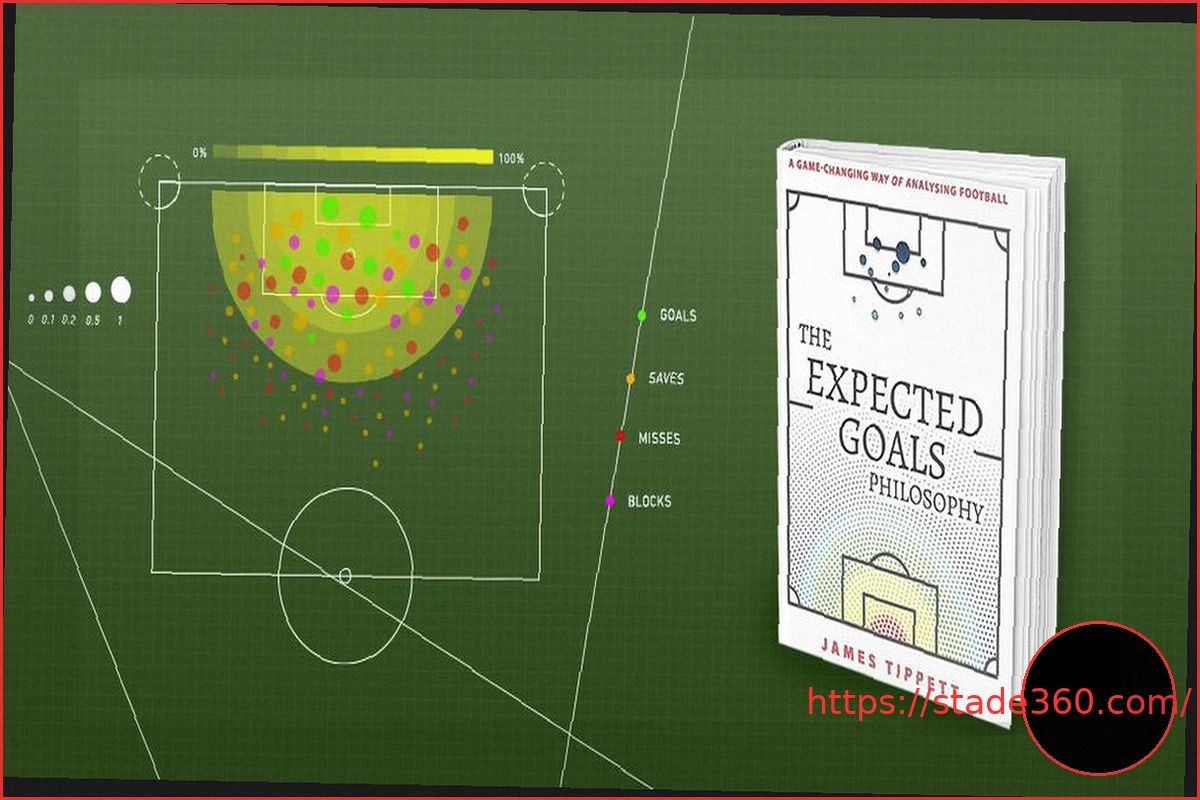
Over the past ten years, Expected Goals (xG) has profoundly transformed how football experts, coaches, and supporters assess offensive output. Designed to measure the quality of goal-scoring chances, xG attributes a probability value to every shot, signifying its potential to become a goal. For instance, a close-range tap-in could have a high xG of 0.8, whereas a speculative long-range effort might register only 0.05.
Despite xG’s establishment as a fundamental tool in contemporary football analytics, it faces considerable scrutiny. From managers cautious about excessive statistical dependence to fans doubting its practical relevance, xG’s acceptance is not universal. This article delves into the primary criticisms leveled against this widely discussed metric.
Key Criticisms of xG
The main points of contention regarding xG frequently revolve around its tendency towards oversimplification, susceptibility to small sample variance, and limitations in capturing full game context. Here’s an overview:
| Criticism | Explanation | Counterargument |
|---|---|---|
| Oversimplifies the game | Reduces complex football dynamics to mere numbers, neglecting crucial elements like tactical acumen, off-ball movement, and individual player brilliance. | Valuable for long-term trend analysis; serves as a complement to, rather than a replacement for, qualitative assessments. |
| Different xG models yield different results | Various data providers (Opta, StatsBomb, Wyscout, etc.) employ distinct algorithms. | While models may vary, overall seasonal trends remain consistent; differences become less significant when analyzed at scale. |
| Ignores context and game state | High or low xG in critical or desperate match situations can misrepresent a team’s actual performance. | Contextual metrics such as xGA (expected goals against) and long-term shot quality can provide additional depth. |
| Misrepresents finishing ability | Does not fully account for the exceptional prowess of elite strikers or the struggles of poor finishers. | Primarily intended for team-level evaluation; individual finishing skill should be assessed alongside xG. |
| High variance in small sample sizes | Single match statistics for xG can often be misleading due to randomness. | Most effective and reliable when analyzed across entire seasons or multiple fixtures. |
| Ignores defensive quality | Primarily focuses on offensive actions, thereby downplaying the significance of defensive strategies and organization. | xGA and other defensive metrics can be integrated with xG to offer a more complete analytical picture. |
1. xG Can Oversimplify the Game
One of the most common critiques is that xG simplifies the intricate nature of football into raw data. Critics argue that the sport involves more than just goal-scoring opportunities; it encompasses tactical awareness, intelligent off-ball movement, creative playmaking, and situational game context, elements that a single xG value cannot adequately capture.
For instance, a goal scored from a chance with a seemingly low xG might be the culmination of extraordinary individual skill or a perfectly executed strategic run. Conversely, a missed high xG opportunity might not signify poor finishing but rather the immense pressure of a pivotal match moment. Analysts like Michael Cox have pointed out that an over-reliance on xG risks prioritizing the sheer volume of opportunities over the qualitative aspects of play, potentially overlooking the subtle complexities that make football so engaging.
2. Different xG Models Yield Different Results
Another significant point of contention is the lack of standardization for xG. Numerous analytics companies—including Opta, StatsBomb, and Wyscout—employ their own distinct algorithms and weighting systems. Some models factor in player positioning, defensive pressure, and shot type, while others primarily depend on distance and angle to goal.
This variance means that the same match can produce different aggregate xG totals depending on the specific model used, which raises questions about its consistency and reliability. Critics suggest that while xG can highlight general trends, it should not be treated as an exact measure of performance, particularly when making cross-comparisons between different leagues or teams that utilize data from varying providers.
3. Context and Game State Are Often Ignored
Typically, xG assesses shots in isolation, without adequately considering the broader game context. For example, a team trailing 3–0 late in a match might resort to taking speculative, low-quality shots—each with a minimal xG. However, these shots do not accurately reflect the team’s overall attacking prowess demonstrated earlier in the game.
Similarly, tactical context plays a crucial role. A team with high possession dominating a weaker opponent might accumulate a substantial xG total, yet this doesn’t automatically equate to superior skill or strategic brilliance. Critics argue that without incorporating factors such as match score, prevailing pressure, and specific game circumstances, xG can present a distorted view of performance.
4. It Can Misrepresent Finishing Ability
One of the most frequently cited limitations of xG is its inability to fully account for a player’s inherent finishing skill. Elite strikers often consistently exceed their expected goals, while others habitually underperform. This discrepancy can lead to misjudgments:
- Overvaluing underperforming strikers: A forward who routinely misses high xG opportunities might be perceived as merely unlucky, even if their finishing technique is subpar.
- Undervaluing elite finishers: Players like Erling Haaland or Mohamed Salah frequently convert low xG chances at a rate significantly beyond statistical expectations. Relying solely on xG could diminish recognition of their clinical proficiency.
Critics suggest that while xG is an excellent metric for evaluating team-level attacking performance, it should not supersede qualitative assessments of individual player talent.
5. High Variance in Small Sample Sizes
xG proves most dependable when analyzed over extensive datasets, such as an entire football season. In smaller sample sizes—like individual matches or brief tournaments—the variance can be extreme. A team might generate a high xG but fail to score due to an inspired goalkeeping performance, poor finishing on the day, or simply bad luck.
This issue is particularly problematic for media narratives, where single-game xG statistics are often misinterpreted. Fans who hear that their team “should have scored five goals” might feel unfairly treated, even if the final result was a realistic reflection of the day’s events. Critics emphasize that xG is a trend indicator, not a definitive predictor, and its application for single-match judgments can misinform casual observers.
6. Ignoring Defensive Quality
xG primarily focuses on attacking events, often neglecting the equally important defensive context of the game. A team allowing a low xG might be exhibiting exceptional defensive organization, which traditional xG analysis doesn’t always highlight. Conversely, conceding goals from high-xG chances could be attributed to “bad luck” when it might actually stem from poor defensive positioning or tactical errors.
Some advanced models attempt to incorporate xGA (expected goals against), but even then, the complex interplay of tactical schemes, pressing intensity, and goalkeeper skill complicates a comprehensive interpretation. Critics underscore that xG, when considered in isolation, cannot fully encapsulate the defensive side of football.
Conclusion: xG is Powerful, but Not Perfect
Expected Goals is undeniably a revolutionary analytical tool in football. It enables teams, analysts, and fans to objectively quantify chance quality and identify sides that are underperforming or overperforming relative to their opportunities. However, critics rightly caution against its uncritical reliance.
xG is not a replacement for qualitative analysis, contextual understanding, or human judgment. Its inherent limitations—such as high variance in small samples, disparities between different models, and its inability to fully capture individual finishing skill or nuanced tactical play—mean it should always complement, rather than completely supersede, traditional scouting and analytical methods.
In essence, xG offers a valuable lens through which to view the game, but it is not the entire picture. Grasping its limitations allows fans to appreciate the profound depth of football beyond mere statistics and helps prevent oversimplified narratives centered on “luck” or “underperformance.”