

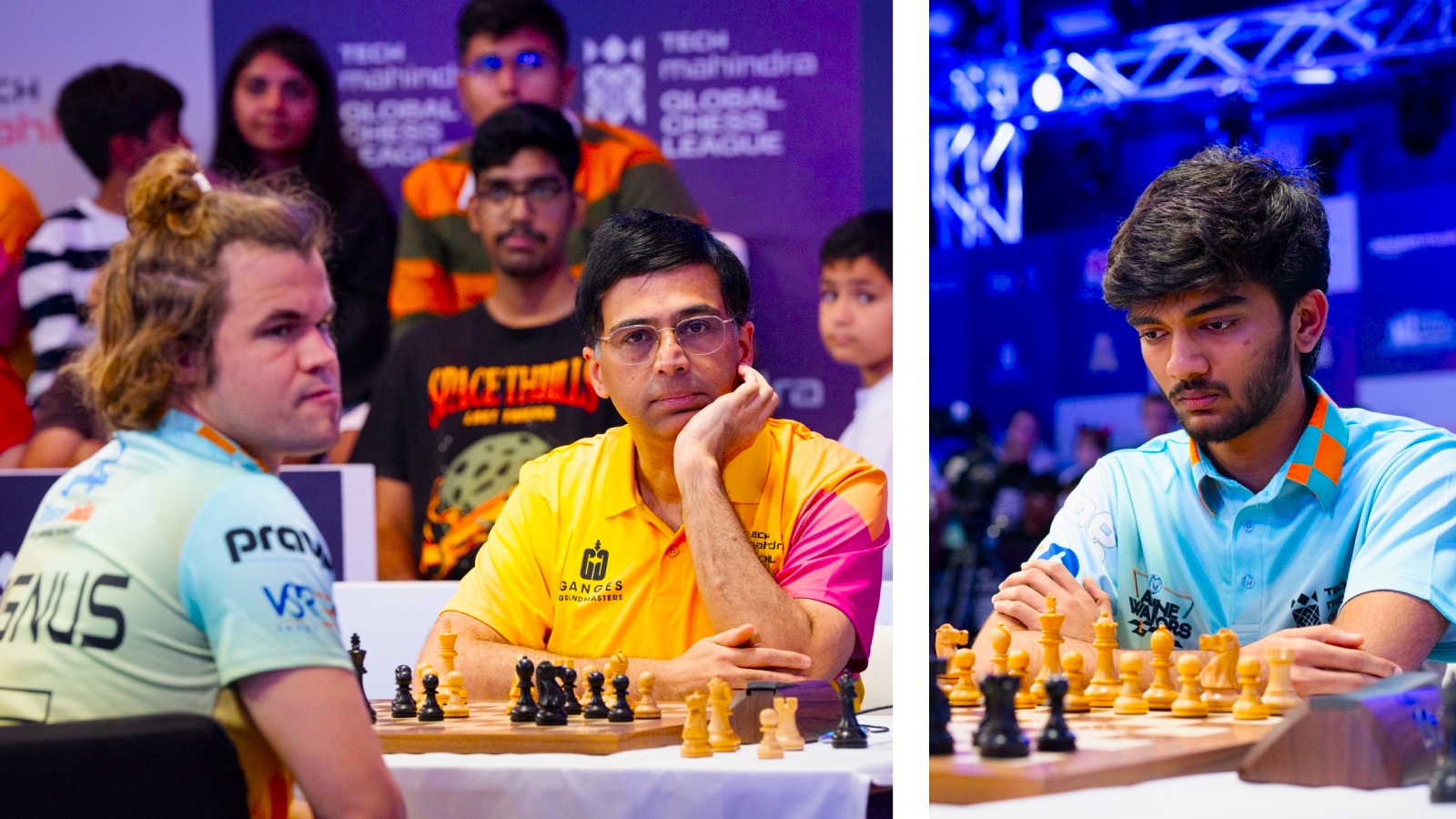
The highly anticipated third season of the Global Chess League (GCL) is set to commence on December 14th, transforming the historic Royal Opera House in Mumbai, India, into the epicenter of competitive chess. Far from the silent, solitary battles often associated with the sport, the GCL offers a high-stakes, rapid-play team format designed to amplify excitement and foster intergenerational collaboration.
This year’s edition is particularly star-studded, featuring a confluence of eras. Leading the charge are reigning World Champion D Gukesh, global number two and streaming titan Hikaru Nakamura, and the ever-present legend Viswanathan Anand. They are joined by a formidable cast including Fabiano Caruana, Maxime Vachier-Lagrave, and a host of elite women and prodigies, ensuring that the title defense by the Triveni Continental Kings will be anything but simple.
The GCL Blueprint: Where Teamwork Takes the Center Stage
In a sport traditionally defined by individual brilliance, the GCL presents a welcome divergence. Launched in 2023, the league mandates six teams, each composed of an `Icon` player, two supplementary men, two women, and a junior (Prodigy). This mixed-gender, mixed-experience structure is not merely a novelty; it is foundational to the league’s appeal.
For players like India`s top woman player, Koneru Humpy, the GCL provides a crucial platform for interaction and test runs ahead of major individual events, such as the FIDE Women’s Candidates tournament. The opportunity to share a strategy room with high-caliber players—in Humpy’s case, Wesley So and Shakhriyar Mamedyarov on the upGrad Mumba Masters—offers invaluable, low-pressure development time that the solitary circuit often lacks.
A Critical Technical Evolution: The Increment Solution
While the rapid pace of the GCL ensures dynamism, previous seasons faced technical scrutiny, particularly concerning the time control—a 20-minute rapid game with zero increment. This led to frantic, occasionally chaotic endgames where clock management outweighed strategic depth, prompting some top players, including Anish Giri, to describe the format as “a bit ridiculous.”
In a significant adjustment, GCL Commissioner Gourav Rakshit confirmed that Season 3 will adopt a player-recommended modification: after the 40th move, players will receive a two-second increment. This change is technical but profoundly important. It is designed to ensure that superior play, rather than just superior clock-hitting speed, determines the final outcome.
The adjustment in time control reflects a commitment to competitive integrity. It moves the GCL from purely sensational entertainment to a serious, high-quality rapid tournament where the intricacies of the endgame are preserved.
The Contenders: Analyzing the Roster Depth
Six teams will vie for the championship. Each squad balances established icons with rising stars, creating unpredictable match dynamics. The selection process ensures parity, making predictions notoriously difficult. For instance, in 2023, a team featuring Magnus Carlsen, Gukesh, and Praggnanandhaa failed to reach the top two, a testament to the league’s volatile team scoring system.
Nevertheless, two teams appear particularly potent on paper:
- Alpine SG Pipers: Anchored by Fabiano Caruana and featuring the phenomenal Hou Yifan and R Praggnanandhaa. This team possesses formidable depth across all boards.
- PBG Alaskan Knights: Led by the recently crowned World Champion D Gukesh, paired with Arjun Erigaisi. While Gukesh’s rapid form has sometimes shown momentary weakness, the sheer firepower of this team makes them intimidating opponents.
Full Squad Overview (Key Players by Team)
| Team | Icon Player | SS Men 1 | SS Women 1 |
|---|---|---|---|
| Alpine SG Pipers | Fabiano Caruana | Praggnanandhaa R | Hou Yifan |
| Ganges Grandmasters | Viswanathan Anand | Vincent Keymer | Stavroula Tsolakidou |
| upGrad Mumba Masters | Maxime Vachier-Lagrave | Wesley So | Koneru Humpy |
| PBG Alaskan Knights | Gukesh Dommaraju | Arjun Erigaisi | Sara Khadem |
| Triveni Continental Kings | Alireza Firouzja | Wei Yi | Alexandra Kosteniuk |
| American Gambits | Hikaru Nakamura | Richard Rapport | Bibisara Assaubayeva |
Format and Scoring: Maximizing the Stakes
The GCL structure demands precision in scoring. Matches are decided across six boards, but the value of a win is strategically skewed to encourage dynamic play:
- Winning with Black: 4 game points
- Winning with White: 3 game points
- Draw: 1 game point
These game points determine the match victor, which then awards points towards the league standings (3 points for a win, 1 for a draw). This system guarantees that every move, on every board, carries significant weight, forcing teams to strategically deploy their players based on color advantage.
The Fan Experience in Mumbai
A key focus for Season 3 is accessibility. While high-level chess traditionally demands absolute silence, the GCL is striving to create a festival atmosphere without compromising concentration. Plans include enhanced fan zones and, significantly, consideration for allowing fans inside the playing hall to wear headphones for direct access to commentary and live evaluation boards. This commitment aims to bridge the gap between the `hardcore` chess enthusiast and the casual spectator, making the GCL a true public sporting event.
From technical rule refinement to unparalleled star power, the Global Chess League Season 3 promises ten days of elite rapid chess where individual genius is harnessed for collective victory. The battle for supremacy in Mumbai is about to begin.
 Felix Harwood