

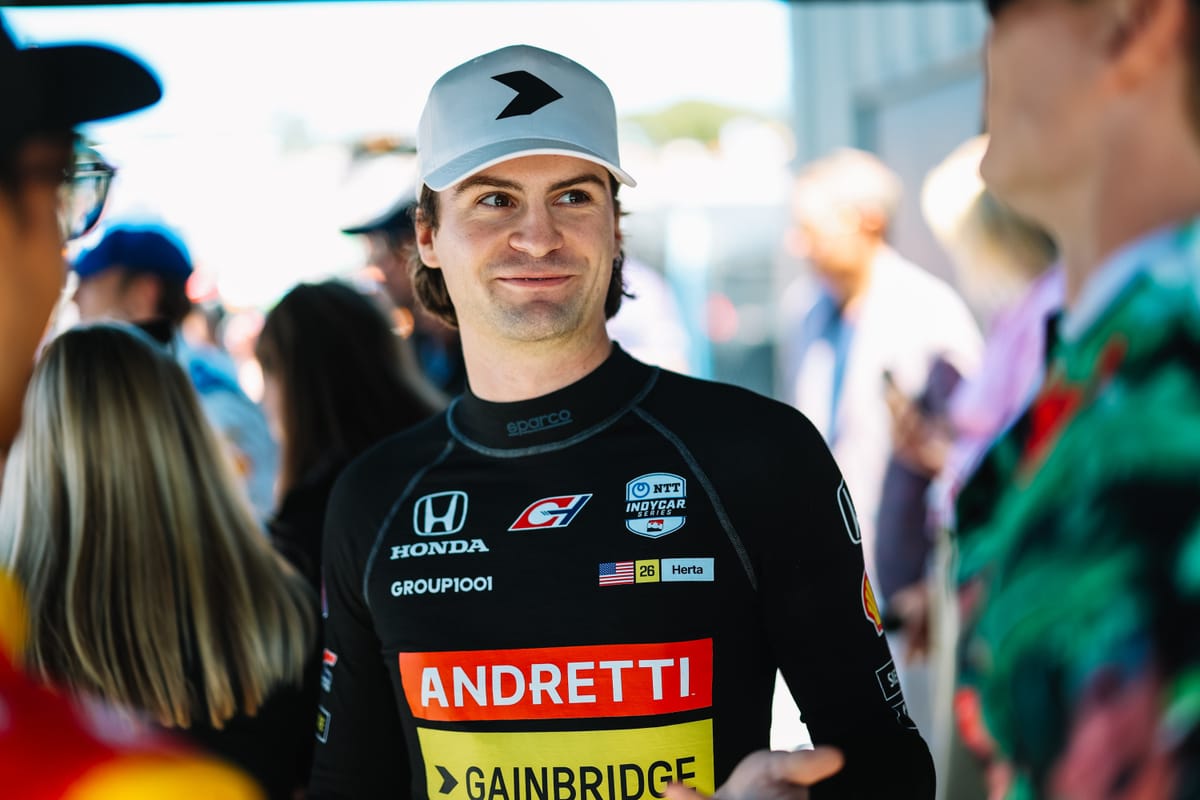
In the highly structured world of elite professional sports, the trajectory is almost always linear: upward progression. Rarely does an established star willingly step backward to pursue a chance at a different, often perceived as grander, prize. Yet, this is precisely the unorthodox maneuver Colton Herta, one of the brightest talents in the NTT IndyCar Series, has embarked upon.
Herta, a perennial contender for the IndyCar championship, a driver who boasts nine victories and holds the record as the series` youngest winner at just 18, is trading the familiar thunder of American open-wheel racing for the highly competitive, yet technically restrictive, environment of Formula 2 (F2). This is not merely a change of scenery; it is an extraordinary, high-stakes gamble designed solely to unlock the gateway to Formula 1 (F1).
The motivation is clear: a desired seat with the ambitious, incoming Cadillac F1 team, backed by TWG Motorsports and controlling owner Mark Walters. The catch? Herta lacks the required F1 Super License points—a bureaucratic hurdle preventing drivers, regardless of proven talent, from competing at the pinnacle of motorsport.
The Super License Quandary: Talent vs. Paperwork
In a bygone era, sheer driving talent was the primary currency. Legends like Mario Andretti, as he recounts, dreamed of F1 from the dirt tracks, and if the skill was present, the door opened. Today, the system demands a specific accumulation of Super License points, earned through performance in certified feeder series.
Herta’s IndyCar success, while significant, did not provide the necessary volume of points in recent seasons to bypass the F2 requirement. At 25 years old, and deeply entrenched in his career, the decision was crystallized by a sense of urgency. As quoted by motorsport insiders, Herta views this as a “now or never” situation, necessitating a radical strategy: secure a seat with the Hitech TGR F2 team for 2026, dominate the series, accumulate the missing points, and secure the F1 entry.
This commitment is admirable, albeit slightly absurd. A driver whose face adorned the 2025 IndyCar media guide is essentially returning to racing’s postgraduate program to obtain a mandatory permission slip.
The Great Adaptation: The Technical Chasm Between IndyCar and F2
On paper, an established IndyCar veteran should easily outpace the young, developing drivers of F2. The reality, however, is far more complex due to fundamental differences in machinery, specifically tires.
IndyCar drivers are accustomed to the robust, durable Firestone rubber, which permits sustained, aggressive driving and allows for multiple high-speed laps. F2, conversely, uses hypersensitive Pirelli compounds that demand a distinct, delicate approach. These tires degrade rapidly and are unforgiving of hard running.
As noted by American drivers who have navigated the transition, the F2 experience is characterized by a severe limitation on useful practice laps. Qualifying is a high-wire act of precision: the driver must “troll around” at low speed to manage thermal energy, then execute one perfect push lap while the tire is at its optimal peak. There is minimal preparation for the high-grip qualifying run.
Herta`s initial foray into this new world confirmed the steep learning curve. During a three-day postseason test in Abu Dhabi, his fastest times placed him 14th and 19th among the 22 participants on the final day. This performance gap is not a reflection of a lack of pace, but rather the fundamental difficulty in shedding years of learned driving habits tailored to IndyCar’s durable setup.
Herta must master a driving style that emphasizes tire preservation and requires instantaneous perfection, skills fundamentally different from the sustained aggression that brought him success in North America.
IndyCar’s Global Litmus Test
The implications of Herta’s success—or struggle—extend far beyond his personal career. His performance in F2 has inadvertently made him a representative of the entire IndyCar Series on the global stage.
In the perennial and often aggressive debate over which series boasts superior driver talent—F1 or IndyCar—Herta’s results will be scrutinized microscopically. His former IndyCar rival and current McLaren F1 test driver, Pato O’Ward, openly acknowledged the pressure: “If it doesn`t go well, there`s always going to be those guys that hook to that and use that as rage bait.”
If Herta dominates, it validates IndyCar as a series producing world-class talent ready for F1. If he struggles to adapt, critics within the highly partisan European motorsport community will inevitably use his challenges to diminish the overall caliber of the IndyCar Series.
The stakes are intensely personal and geopolitical. Herta is carrying the burden of IndyCar’s reputation. His decision to take a tactical retreat, risking his established position and reputation, highlights the depth of his F1 ambition. The motorsports world is watching to see if this unprecedented step backward will indeed be the catalyst for the ultimate leap forward.